Born from Fire & Legend
The volcanic origins, ancient legends, and living culture of the Pearl of the Pacific.
The Birth of an Island
Bora Bora was born from fire. Approximately 4 million years ago, a volcanic eruption pierced the surface of the Pacific Ocean, creating the island that the ancient Polynesians would later call Pora Pora — meaning "first born."
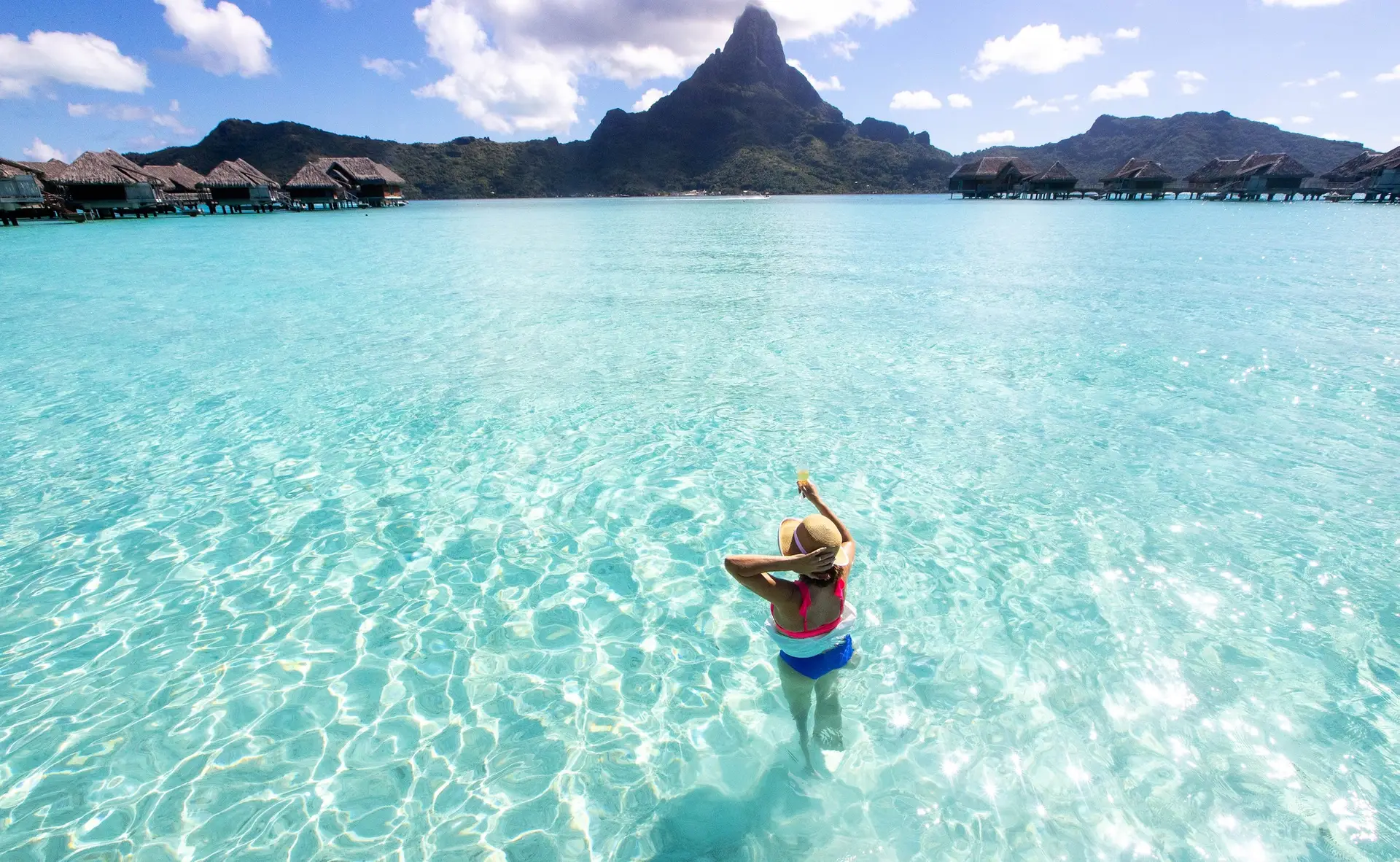
At its heart stands Mount Otemanu (727m), the dramatic remnant of the extinct volcano. Its twin peak, Mount Pahia (661m), forms the iconic silhouette visible from every corner of the lagoon. Over millennia, the volcanic rock eroded while coral grew around its shores, creating the breathtaking barrier reef and turquoise lagoon that define Bora Bora today.
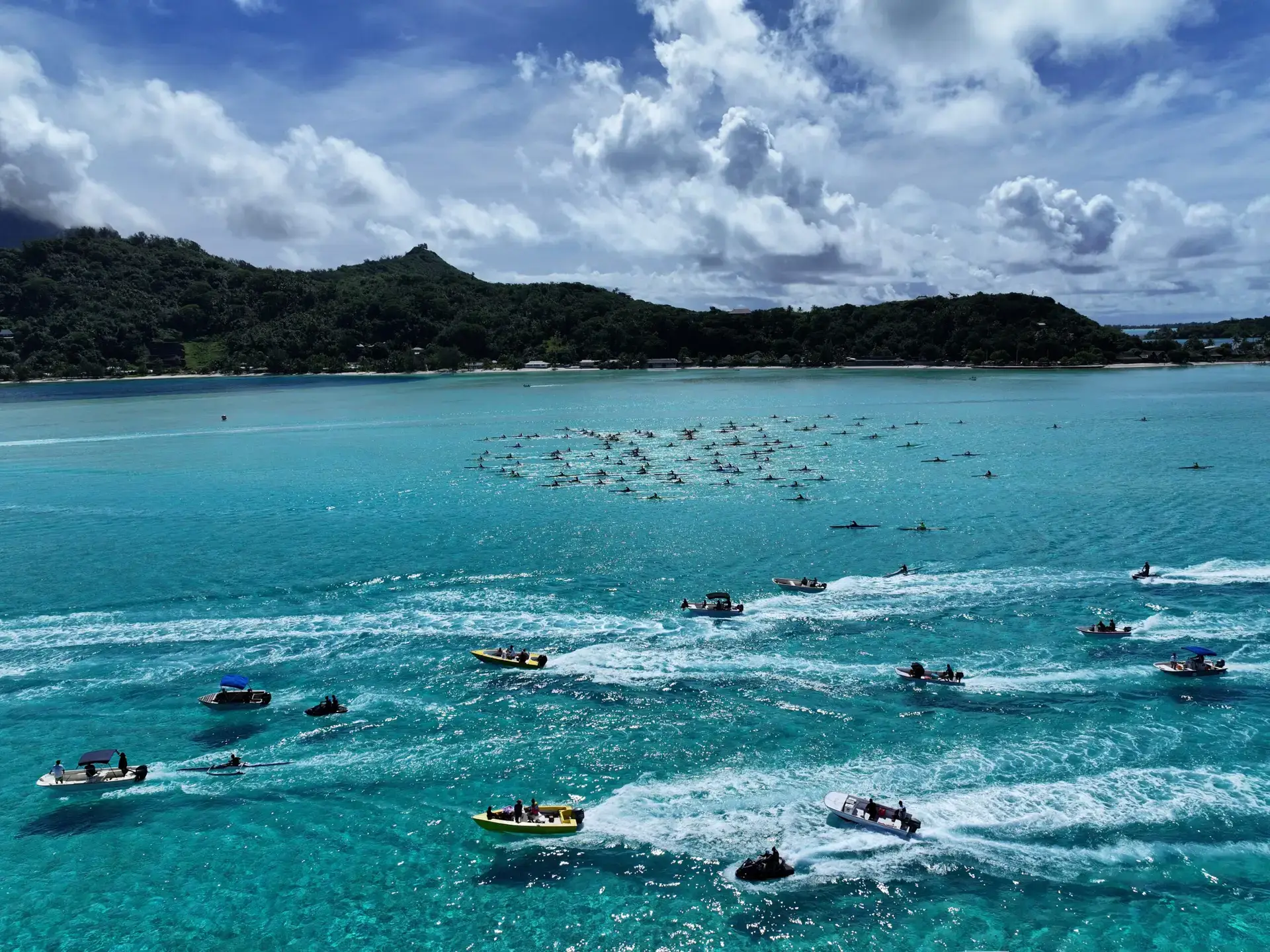
The lagoon — a living ecosystem of coral, fish, sharks, and rays — is enclosed by a necklace of motu (small islets) that ring the main island. This protected body of water, with its shades of blue impossible to describe, is where the TALIFIT Race unfolds every April.
The Myths of Pora Pora
Ancient stories passed down through generations of Polynesian navigators.
The Legend of Hiro & the Mountain
According to Polynesian oral tradition, the great warrior and navigator Hiro attempted to steal Mount Pahia from the island of Raiatea under the cover of night. He tied a rope to the mountain and began to drag it across the ocean in his canoe. But a warrior priest of Raiatea, sensing the theft, chanted a prayer that severed the rope.
The broken peak fell into the sea and became the distinctive split summit of Mount Otemanu. The fragments scattered in the lagoon became the motus (islets) that surround Bora Bora today. This is why Otemanu's summit is split — the scar of Hiro's broken rope.
Pora Pora — The First Born
In the Polynesian creation narrative, Bora Bora was the first island created after Raiatea (the sacred island, Havai'i). Its original name, Pora Pora, means "first born" — reflecting its primordial status in Polynesian cosmology. European explorers later corrupted "Pora Pora" to "Bora Bora."
The island was considered a training ground for warriors (aito), and its lagoon was the arena where young men proved their strength and courage through paddling, swimming, and combat. This martial tradition echoes today in the TALIFIT Race, where the longest and most grueling distance — the 18km — is named the Aito.
The Sacred Lagoon
For the ancient Polynesians, the lagoon of Bora Bora was not merely water — it was a living entity with its own mana. The varying shades of blue and green were said to reflect the moods of the ocean spirit, Tangaroa (or Ta'aroa in Tahitian), the god of the sea.
Fishermen would perform rituals before entering the lagoon, and certain areas were considered tapu (sacred, forbidden). The barrier reef was seen as the protective embrace of the gods, shielding the island and its people from the fury of the open ocean. Today, the reef still shields paddlers during the TALIFIT Race, creating the calm conditions that make Bora Bora racing so unique.
Masters of the Ocean
The Polynesian navigators were among the greatest seafarers in human history. Without compasses, maps, or instruments, they crossed the largest ocean on Earth — navigating by the stars, the movement of waves, the flight of birds, and the color of the water.
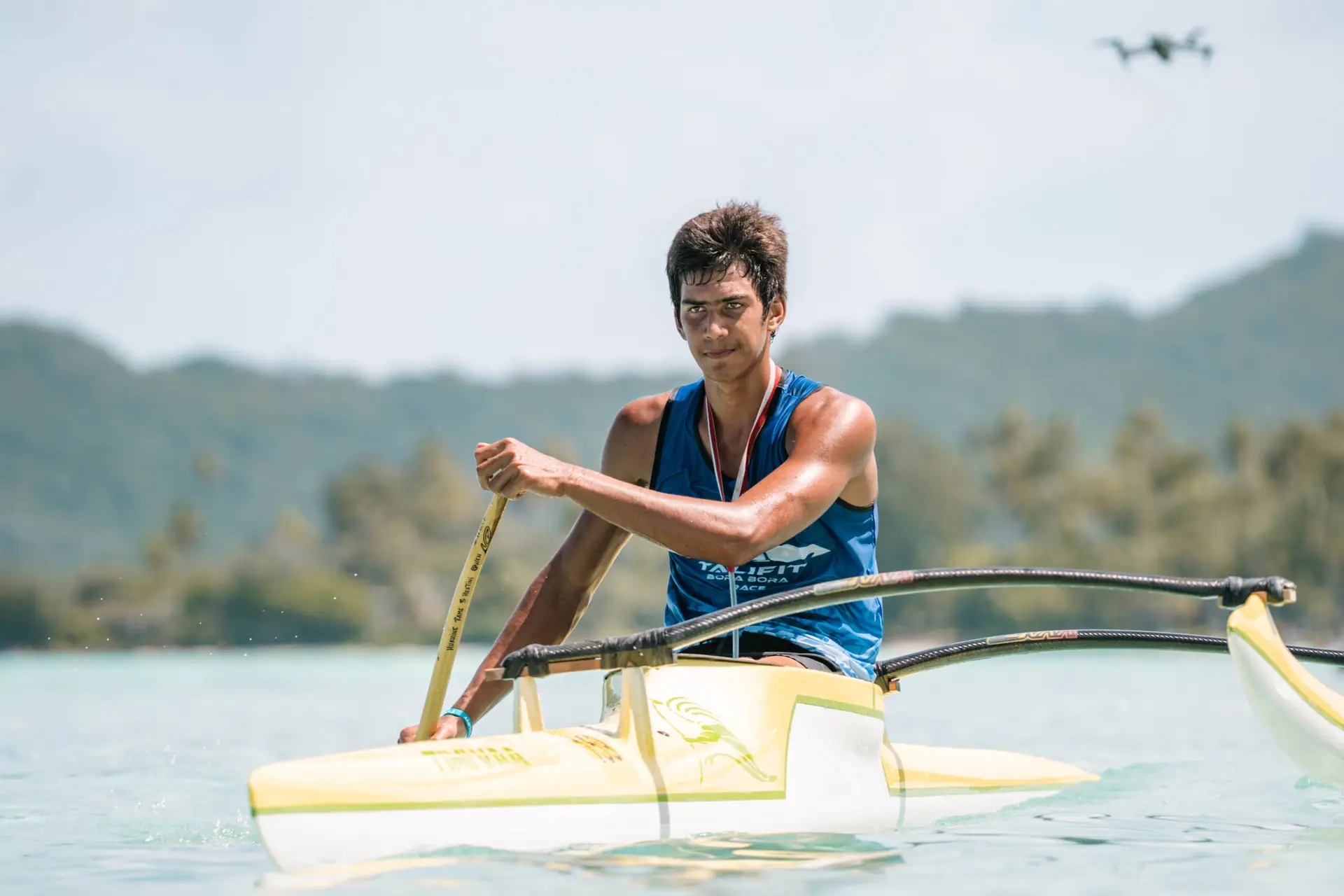
Their vessels were double-hulled sailing canoes and outrigger canoes (va'a) — sophisticated craft that could carry families, animals, plants, and supplies across thousands of miles of open water. The Polynesian expansion — from Southeast Asia to Hawaii, New Zealand, and Easter Island — is one of the most remarkable migrations in human history.
Every stroke of a paddle at the TALIFIT Race is an echo of this heritage. When paddlers race across the Bora Bora lagoon, they follow in the wake of ancestors who conquered the Pacific.
Bora Bora Today
A vibrant island where tradition and modernity coexist.
Te Reo Ma'ohi
The Tahitian language is spoken daily alongside French. Greetings like "Ia ora na" (hello) and "Māuruuru" (thank you) are part of everyday life.
Dance & Music
Ōte'a and Aparima dances tell stories of gods, warriors, and the ocean. The rhythmic drums of the to'ere echo during festivals and ceremonies.
Tattoo Tradition
The word "tattoo" comes from the Polynesian "tatau." Traditional motifs represent identity, rank, genealogy, and spiritual protection.
Flower Crowns
The hei (flower crown) and tiare tahiti (Tahitian gardenia) are symbols of welcome and celebration. A flower behind the left ear means "taken."
The Ma'a Tahiti
Traditional Polynesian feast cooked in an underground oven (ahima'a). Taro, breadfruit, pork, and fish wrapped in banana leaves.
Heiva Festival
The annual Heiva i Tahiti (July) is the biggest cultural festival in French Polynesia — dance competitions, sports, music, and traditional games.
Bora Bora at a Glance
Experience the Mana
Come to Bora Bora and feel the spirit of the island. Whether you paddle, explore, or simply stand on Matira Beach at sunset — the mana will find you.